
Hello, we very recently received the decison of the Ontario Land Tribunal on the fate of the former Davis Tannery property. It can proceed, although not in its entirety, as stated by the City’s press release. Further, it cannot cap any portion of the Provincially Significant Wetland.
Also, more than 120 people attended the Natural Heritage Study community meeting on July 23rd. The voice for protection of what remains of our woodlands and wetlands was powerful! We have a letter, written by the Save Lemoine Point Farm Group, that you can send to the City by August 6th, when comments close on the revised NHS.
We began this newsletter with the goal of keeping you up to date with the appeal process. In fact, the branching boughs of the oak tree shown in our heading are from a photo of the 200+ year old white oak found at the south-east corner of the property. This tree, along with more than 2,000 others, will be removed if the Tannery development goes ahead as decided by the OLT.
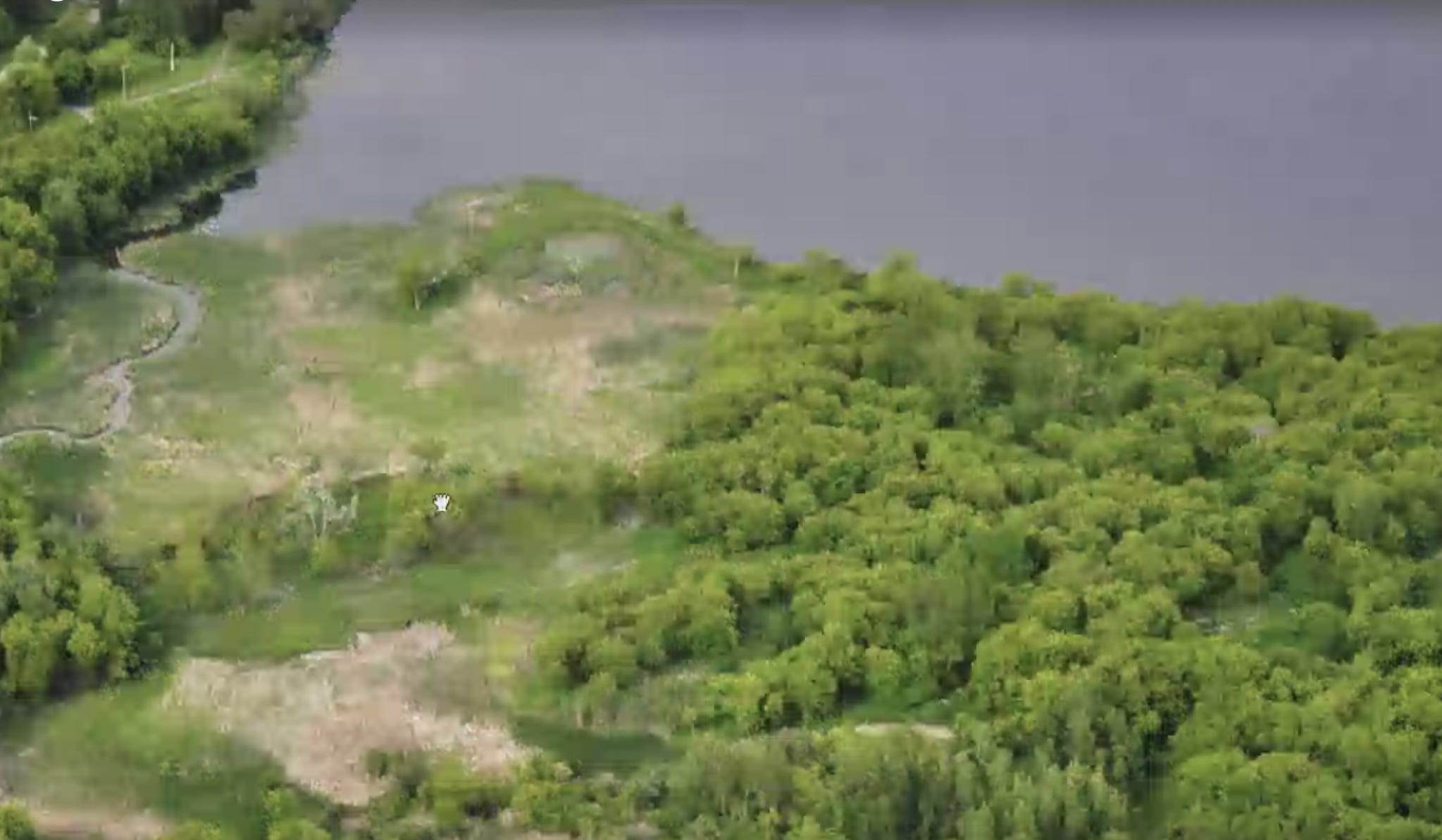
Part of the Forest and Wetland on the former Davis Tannery:
What does this mean?
Housing can be built on the highly contaminated property. In our research we have not found a residential area that has been built on a former tannery property.
The OLT does not seem to be concerned that about 75% of the contaminated soil will remain on the property, or that the remainder will require trucking to a hazardous waste site, as yet unidentified.
According to the City, the developer is required to:
“Restart the draft plan of subdivision. This will include resubmitting technical documents detailing conditions such as road and infrastructure designs, and habitat and shoreline protection. Following the completion of the technical review, a report will be brought forward to the Planning Committee and Council with a recommendation by City staff for consideration.
Brownfield Community Improvement Plan. In Oct. 2020, Council approved the creation of a special project area for the Tannery lands that enabled increased financial benefits and extended timelines to help facilitate the remediation of the land. Records of Site Condition will be needed to allow the proposed change in land use from formerly industrial to residential and parkland.
Applications for site plan control approval will be needed for each phase of the development, along with a landscape plan to replant and re-naturalize the shoreline in consultation with Cataraqui Region Conservation Authority, Parks Canada and Transport Canada.”
These processes are complex and could take many months to complete. However, we plan to watch city hall and the developer very closely to make sure the various steps are carried out properly! If anyone wants to help us, please let us know!
What can we do right now?
Let your Councillor know that you are disappointed with this outcome and that you ask that the woodland reman intact while a Risk Assessment (RA) has been accepted by the Ministry of the Environment, Conservation and Parks prior to the start of the Record of Site Condition process. The RA does not require clear cutting of the property.
Email the Mayor and Council.
If you are in the area, on the street or on the water, please take photos and/or videos of any construction activity and forward them to us.
Imagine that both east and west edges of urban Kingston are bounded by woodlands, wetlands and walking paths, and that they might be connected by an east-west active transport route (i.e. an intact Waterfront path). The Tannery property and Lemoine Point Farm could serve as the two benchmarks in this vision!
We have submitted a media release that has been published in whole or in part by local news organizations. Here is the original release:
Media Release - July 28, 2025
No Clearcuts Deeply Disappointed and Concerned after the OLT Tannery Decision
Kingston, ON - No Clearcuts Kingston (NCK) is deeply disappointed by the Ontario Land Tribunal’s decision to allow the clearcutting of 2000 trees in the “Significant” Tannery forest. It is also concerned that the result will be the release of toxins into the air and river.
“We are extremely upset and disheartened to learn that the desire of so many Kingstonians to preserve the Tannery urban forest has been thwarted by the Tribunal,” said Kathleen O’Hara, No Clearcuts Kingston. “Sadly, given the fact that Ford’s Ontario has become increasingly pro-development and anti-citizen-involvement, we are not entirely surprised.”
O’Hara noted that, since NCK was allowed to participate in the Tannery hearing, Ford’s Bill 23 has taken that right away. Citizens’ groups have been barred from OLT hearings. Also, they can no longer appeal OLT decisions.
Retired biologist Kerry Hill, No Clearcuts Kingston, expressed her science-based concerns: “We know from the expert testimony at the hearing that clearcutting the site and disturbing the soil has the potential to release extremely dangerous chemicals. Chromium III is safe in the ground, but when it combines with oxygen it becomes Chromium VI which is lethal to animals. This is just one example of potential hazards.”
NCK announced that it will try to minimize the damage caused by the OLT’s decision. It will be consulting with its lawyers on a variety of issues.
“We all know that parts of the Tannery lands are highly contaminated,” said Hill. “How will the developer, City, provincial and federal government officials co-ordinate a safe clean-up plan? Will there be credible, independent monitoring of environmental impacts on a daily basis while the pre-building clearcutting is underway? There must be safety measures in place that should be acted on immediately.”
The OLT decision did stipulate that the wetland cannot be capped. No Clearcuts will be asking the City whether it will request a new development plan because of the removal of the green space that was to be provided by the capped wetland.
Last week, the City held a public meeting on its Natural Heritage Study. More than 120 people attended, many of whom are concerned about the loss of woodlands and wetlands within the urban boundary and beyond - if the Urban Boundary is extended, as the City is promoting.
“This OLT decision wiping out 2000 trees certainly shows how vulnerable our natural surroundings are,” added O’Hara. “Politicians and officials can label areas “Significant” and so on, but what real protection does this offer in our present “Build, Build, Build” society? Citizens have got to be even more organized, vigilant, and vocal!”
“We are facing an increasingly deadly climate crisis,” added Hill. “It’s heartbreaking to see the destruction of more Kingston trees when we will need them to cool temperatures, clean our smokey air, prevent flooding and erosion, and, in the case of the Tannery land, help keep toxins secured in the ground.”
No Clearcuts would like to thank all the Kingstonians who sent emails to the City, spoke at public meetings, donated and/or helped raise money, attended rallies, and much more, in an attempt to save the biodiverse forest and protect our air and water.
Update on the Natural Heritage Study
Due to the large turnout to the community meeting July 23rd, the date for comments on the City’s Natural Heritage Study has been extended to August 6th.
Letters can be submitted to:
mayor&council@cityofkingston.ca
noddie@cityofkingston.ca
getinvolvedkingston@cityofkingston.ca
The Save Lemoine Point Farm Group has written a detailed letter regarding the NHS revision and how it must protect the few remaining areas of woodland and wetland in the City. They ask us to write a more condensed version, see below. Please feel free to personalize this letter and/or make it more inclusive of all larger woodland areas within the urban boundary.
Subject: Comments on the Natural Heritage Study and Need for Permanent Protection of Lemoine Point Farm
Dear Mayor Paterson, City Councillors, and Planning Staff,
I’m writing to express my strong support for permanently protecting Lemoine Point Farm through recommendations in the Natural Heritage Study (NHS). This land is ecologically, agriculturally and economically important and must be safeguarded for future generations.
Please ensure the NHS includes strong, binding policy recommendations that:
Permanently re-zone and protect Lemoine Point Farm and other ecologically significant lands.
Strengthen and reform the Environmental Impact Study (EIS) process to prevent further loss of natural areas.
Embed long-term conservation policies in the Official Plan and zoning bylaws.
Pause urban boundary expansion consideration until stronger nature protection policies are in place and population growth trends are updated.
Make all NHS mapping public now and omit site specific developer-funded EIS data from the study
Track cumulative environmental impacts and forest cover to inform better decision-making when considering development applications.
Integrate NHS mapping into the City’s Natural Asset Management for the whole municipality (not just city owned land) recognizing the economic value of ecosystems.
Forests, wetlands, shorelines and farmland are vital infrastructure—protecting them supports climate resilience, biodiversity, flood prevention, clean water, and community well-being.
Please lead with a nature-first approach and act now to protect Lemoine Point Farm and our remaining natural heritage resources.
Sincerely,
[Your Name]
[Optional: Your Neighbourhood or Address]